
Force Conscription by the terrorist junta and its consequences
The terrorist junta’s attempt at forcible recruitment is an oppression that is a violation of human rights and it will worsen the crisis and difficulties of Myanmar people and will deteriorate the stability of the region.
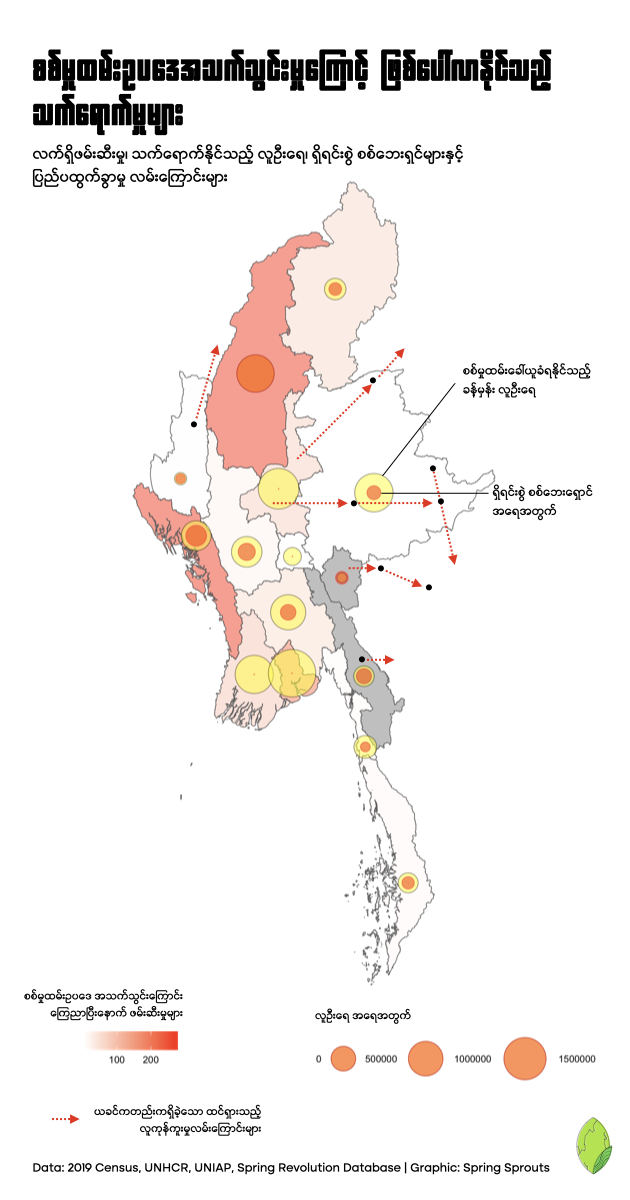
It was announced that the People's Military Service Law which was issued on November 4, 2010 in the last days of Than Shwe's military dictatorship era, will come into force on February 10, 2010. According to the data online, as a result of that law, at least 65 men, 34 women, and up to 964 whose gender cannot be confirmed have been arrested by the military group and its subordinates group, Pyu Saw Htee. Most of the people who have been arrested illegally and disappeared are between the ages of 18 and 35, and hundreds of young people who have fled the war in Rakhine State have been arrested for military service. Among the population arrested by region, Rakhine (279) and Sagaing (278) had the highest number, with Yangon having the third highest number of 194 arrests.
Why would people not accept it?The current military service law is being enforced by the new military dictator Min Aung Hlaing with the law enacted during Than Shwe's military regime. Some people point out that military service is mandatory in various countries of the world, but that point can be said to be wrong due to two points.
The first point is that Min Aung Hlaing's military group, which has been arbitrarily interpreting and violating various laws, starting with the 2008 constitution approved through a fraudulent referendum by their predecessors, has no legal authority to activate any law.
Second, in countries that respect human rights, even if mandatory military service is enforced by law, they must guarantee the right to conscientious objection. This conscience means more than faith and worship, it also includes the right to refuse because of a particular conviction and belief. There must be a right of refusal for conscientious objectors to military service. The law that military dictators impose is merely an attempt to suppress them by force without guaranteeing those rights.
Population that may be affected by region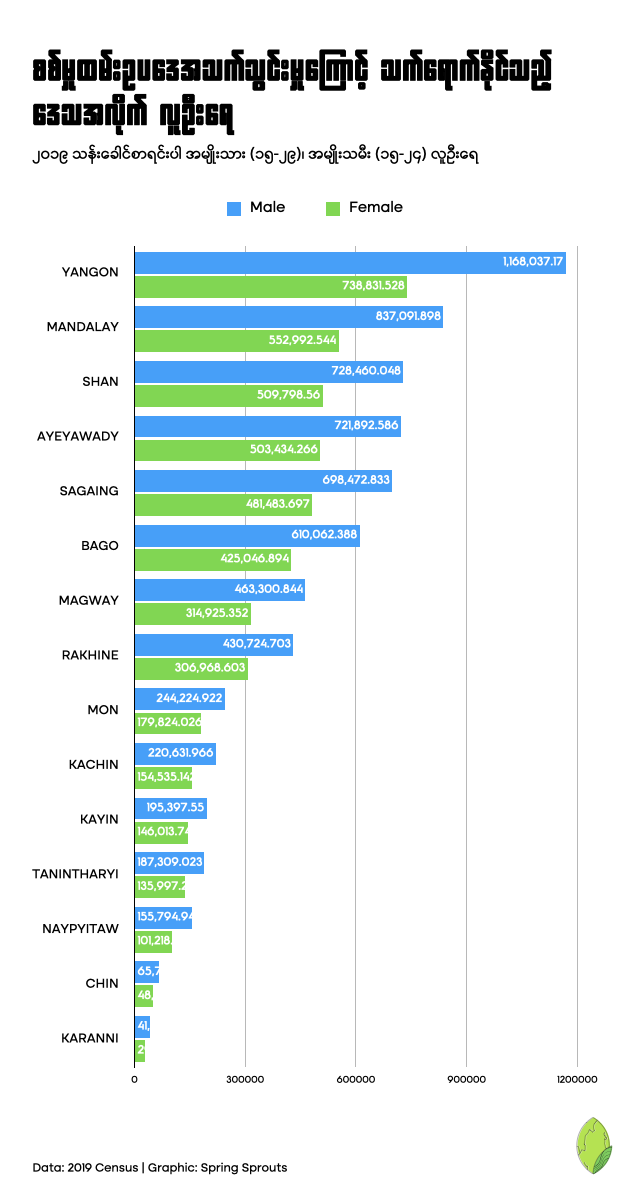
According to the 2019 census data, about 1.6 million young people may be affected by the military regime's implementation of the military service law. Although young people from areas controlled by revolutionary forces, such as Kachin, Arakan, Karen, Karenni, Chin, Northern Shan and Sagaing regions, may be a little calmer compared to young people from other areas. The regime may target more young people from areas under its control. As young people, they sought refuge in the areas controlled by the revolutionary forces and there were already departures to neighboring countries.
Impact on neighboring countriesYoung people fleeing their homes due to the impact of the conscription law may have an impact on areas where there are already displaced people. According to the data of the Office of the United Nations High Commissioner for Refugees as of March 11, there are more than 2.8 million people who have fled the war in Myanmar, there are over 1.1 million IDPs from Sagaing; 349,100 from Rakhine; and 235,800 from Magway.
According to IOM’s report released in October 2023, there are 1.4 million non-Thai residents on the Myanmar-Thai border, of which about 63,000 have migrated since the start of the military coup.
Meanwhile, about 50,600 people from Myanmar have been displaced to the Myanmar-India border areas. According to UNHCR's data as of June 30, 2023, more than 1.1 million Myanmar people are either refugees or seeking political asylum in neighboring countries.
The young people who will leave their places in a hurry because of the apparent arbitrary arrest of a terrorist military group, forced porter, and the pressure of military conscription, can face with the situations where it is possible to be trafficked and to reach to the illegal scams (Zhàpiàn).
Recommendations
As revolutionary forces respond to the unlawful recruitment by the terrorist military group, the following points should be taken into consideration, and the activities that can be done practically and the limitations must be clearly presented to the public.
Encouraging and Supporting efforts to improve community resilience through local people-to-people support;
Providing accommodation to the population who may seek refuge in the liberated area
Providing supports and coordinating with neighboring countries to ensure safe and secure relocations to prevent the human trafficking through the border areas
Calling for negotiating to ensure that people abroad, especially those in neighboring countries, receive relief from the respective governments
Related updates
ASEAN, the UN and International Engagement on Myanmar in October
October was a period when Myanmar's affairs were once again discussed on the world political stage, with the ASEAN Summit and the UN General Assembly. Below is a summary report of international developments on Myanmar during October.
KnHRG Releases 2024 Annual Report Titled "Spirited Resistance"
On February 28, the Karenni Human Rights Group (KnHRG), which works on human rights conditions based in Karenni State, released its annual report for 2024 titled "Spirited Resistance."
NUG Minister of Home Affairs Confirms Military Tribunal to Investigate Ten Suspects in Fr. Donald Martin’s Death
On February 14, in Kangyi Taw Village of Shwebo District, at Ludmal Thawma Church, the Catholic priest from the Archdiocese of Mandalay, Fr. Donald Martin, was killed. The ten suspects for his murder had been identified. The Ministry of Home Affairs and Immigration of the National Unity Government (NUG) announced on January 17 that these suspects would be investigated by military tribunals of the Ministry of Defense of NUG, and actions would be taken according to the law.
Arrest Orders Issued by Argentina for Military Officials and 22 Accused in Genocide Case
The military leaders of the Myanmar army who seized power through the genocide of the Rohingya people, including General Min Aung Hlaing, the Commander-in-Chief, and Deputy Commander-in-Chief General Soe Win, along with 23 other top military leaders, have been issued arrest warrants by the Argentine court in Buenos Aires on February 13, according to an announcement made by the UK-based Burmese Rohingya Organization UK (BROUK) on February 14.
